
A Randomised Control Trial comparing Two Types of Gym Induction

Retention has been a key business issue in the fitness industry since Dr Melvyn Hillsdon published his first report on the subject in 2000 – the first time scientific methods had been used to report what was actually happening in clubs regarding member retention.
Subsequent reports began to unravel the behaviours of members during the adoption and maintenance phases of membership, and one key element was identified: members who visited their club at least once a week in the first four weeks were more likely to remain members over the longer term.
As a result of this finding, many operators rushed to develop gym induction systems – often compulsory – that forced members to attend multiple appointments to ensure this four-visit frequency. However, although these inductions involved increasing amounts of clients’ time spent with an instructor – generally between two and five hours over multiple appointments – little thought was given to the needs and preferences of the member, or to ...
Seven areas of Persuasive Technology to Aid Retention - Part 1

We are living in an age where technology is all pervasive. While we marvel at some of the technology and digital solutions released each year at the Consumer Electronics Show (CES) in Las Vegas, much more technology is never presented openly to the public.
Much of this technology is designed to ease our lives, reduce friction and make us more productive, but over the last decade technologists and designers have been creating services and products that are a lot more persuasive and addictive.
Now that doesn't mean they are EVIL. I see nothing wrong with technology that improves the quality of our lives, encourages us to engage in healthy activities and supports us in achieving what we set out to achieve in fitness. Yet so many operators that I speak to recognise the need to increase their technology capacity, but have yet to decide what to consider and what to include or exclude. That to me suggests that you/they need to answer a few questions before deciding on a course of action.
S...
Best in Class, the Worst of Ideas
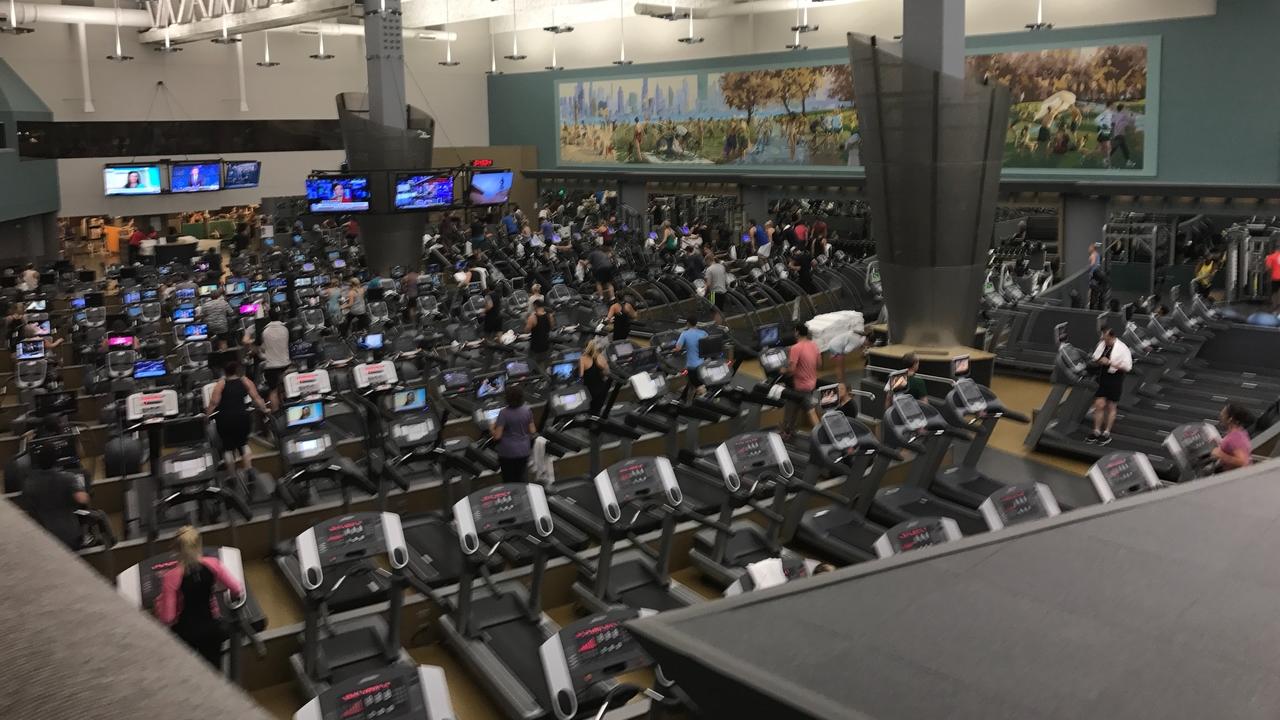
Best in class
As I travel around the world I see a variety of practices, which I sometimes look at with my head tilted to one side,questioning the decision theoperatorhas made. One of these, more common in North America than Europe, is buying equipment from a variety of manufacturers on the premise of giving members access to 'best in class’ kit.
Firstly I would challenge the methodology used to decide best in class. All too often it means the person choosing the equipment has a personal preference or is buying the equipment they want to use, rather than thinking about the experience of the customer. Some of this is based on what we are used to; the feel of a certain type of equipment or the way we want to train, but how can you decide what is best in class unless you’ve have tried every piece of equipment in that category?

Simplicity is key
As I look at equipment choice through the lens of retention and attrition my first consideration is the exercise experience. How easy is it...
Not all service is equal

The economic downturn that began in 2008 and has continued ever since has created a market where consumers are looking for value for money whenever possible. In this environment we have seen the growth of low cost living, pound and 99p stores thrive. Airlines such as Ryan Air and Easyjet who pioneered low cost flying, are reporting increased passenger numbers. But with every discussion about the benefits of low cost flying come discussions about poor service and rude staff.
The leisure and fitness industry has also been effected with the emergence and rapid growth of the low cost or budget gym market. Operators that for many years were at the low cost end of the market are now ten to twenty pounds more expensive each month than their low cost competitors. Firmly placed within the middle market based on price and working hard to justify what the difference is between what they offer that is worth the extra money and failing.
As facilities become more and more alike and the difference ...
Is Technology Holding us Back

With so much new technology that claims to aid retention are we ignoring what’s right under our noses? We explore what’s out there, the challenges operators face in implementing new innovations and how we can overcome them.
The Walled Garden
The infrastructure of our industry's membership management technology is inhibiting our ability to move forward and more often than not it doesn't interact with other technology, behaving like a walled garden, as software companies try to do it all themselves.”
I believes it’s a question of build or buy. Large operators with their own software engineers are in a far better position to develop their own retention technology, such as US-brand Equinox, which has built an AI-led digital coach, that learns customers’ habits to keep them engaged, into its mobile app. Smaller operators can commission projects, but it’s fraught with challenges and there’s massive cost associated with keeping software up to date.
It’s a rock and a hard place situation...
Using segmentation to maximise member retention.
This article first appeared in the Fitness Network
Using segmentation to maximise member retention.
One of the best ways to positively impact retention is to exceed your members’ expectations. However, with potentially thousands of members, understanding their needs in the first place can be challenging. Many operators use the Net Promoter Score (NPS) because it’s quick to administer, and the results are easy to analyse. However, they often miss a trick by diving straight into the findings, without fully understanding how their membership base is made up.
1. You firstly need to understand as much as you can about your current members; how long they’ve been a member, their age and gender for example. Building this picture is the first part of identifying how best to respond to your members’ needs and really impact retention.
2. You then need to ensure that the responses you’ve got are representative of your membership base. For example, if females over 55 years old make up 40% of ...
Nothing makes sense anymore.

The health and fitness industry has changed and many operators are struggling to cope with the new fitness paradigm. The first paradigm shift occurred in the late 1980’s when the emergence of health clubs as an alternative to public sector leisure centres began to emerge. We saw growth in this sector throughout the 1990’s and into the mid 2000’s, merges between business and small independent operators selling out to the bigger brands as the branded chains set out to grab the largest share of the market. Public sector operators had to compete with business’s that had marketing budgets and sales teams driven to achieve the maximum new member acquisitions as possible.
Then in 2008 the brakes went on hard. The daily news reported a massive change in global economics, banks went bust and the growth of the industry slowed almost to a stop. Enter the budget operator and the new business paradigm. Low cost, no frills facilities that did not exaggerate the levels of service members would get a...
Retention in Black and White
Measuring retention and its associated factors are a vital element of running any successful health and fitness business.
During 2013 two studies were conducted, one quantitative and the other qualitative, in order to benchmark the industry for the past four years and gain further insight into how members make decisions.
While the White report focused on the analysis of member data from 342,759 members, the Black report was a series of interviews with 1,000 members that had held two or more health club memberships. These 1,000 members had accumulated a staggering 6,500 years of membership between them.
The White report provided a unique insight into the retention and attrition rates of a representative sample of UK’s health and fitness clubs - members from 100 different clubs representing 38 operators across private chains, independent operators, trusts, local authorities and privately managed leisure facilities.
Using recognised statistical methods for measuring retention and attr...
Being polite was not really customer service, it was just being polite.
The economic downturn that began in 2008 and has continued ever since has created a market where consumers are looking for value for money whenever possible. In this environment we have seen the growth of low cost living, pound and 99p stores thrive. Airlines such as Ryan Air and Easyjet who pioneered low cost flying, are reporting increased passenger numbers. But with every discussion about the benefits of low cost flying come discussions about poor service and rude staff.
The leisure and fitness industry has also been effected with the emergence and rapid growth of the low cost or budget gym market. Operators that for many years were at the low cost end of the market are now ten to twenty pounds more expensive each month than their low cost competitors. Firmly placed within the middle market based on price and working hard to justify what the difference is between what they offer that is worth the extra money and failing.
As facilities become more and more alike and the differenc...
Creating a Community

Just the work ‘club’ creates a sense of community, however many clubs fail to maintain even the most basic level of communications with their members. Clubs are places you join, meet likeminded people and share experiences. Many of those interviewed described no sense of community in clubs that they had previously been members of. Members want to engage with their health club on various levels, sometimes a transactional level other times at a friendship level. This can challenge some operators as only seeing the relationship as transactional and when the transactions are complete the relationship os over.
Over 80% of those interviewed said that the club they enjoyed being a member of was the one that provided them with a sense of belonging. That the member was part of something. sometimes on the periphery and sometimes at the centre but always a member.
Fitting in was a key motivator for day-to-day behavior for usage. They described clubs that had this feeling as a lace you would l...

8 most common mistakes operators make.
Simply enter your name and email to download your free copy today!