
Peloton Is So Addictive (and Why That’s Not an Accident)
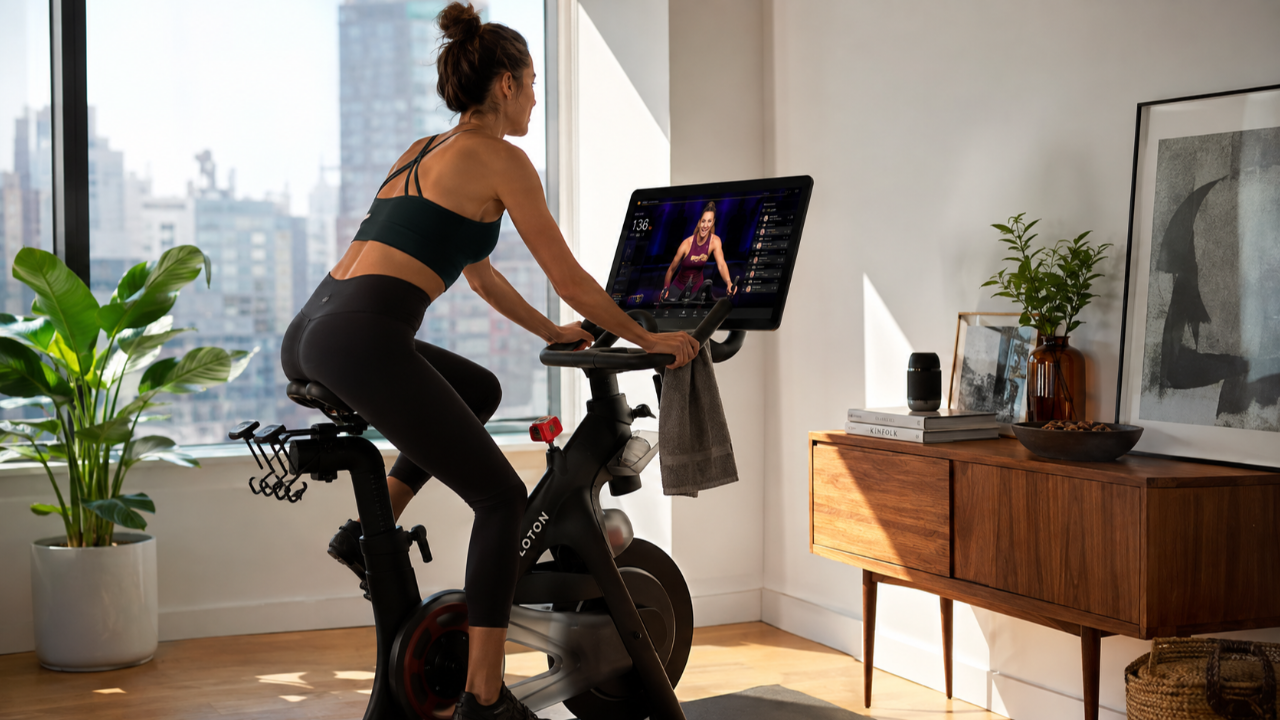
People don’t usually talk about fitness products the way they talk about Peloton.
They don’t say, “I use it a couple of times a week if I feel like it.” They say things like, “I feel off if, I missed a session,” or “I didn’t realise how much I’d miss it until I couldn’t train.”
That language matters.
Peloton isn’t just popular. It’s habit-forming. And while it’s tempting to put that down to good instructors, slick production, or expensive bikes, the real reason runs much deeper.
Peloton is addictive because it understands human behaviour better than most fitness businesses ever have.
Peloton Doesn’t Feel Like Exercise and That’s the Point
One of the biggest reasons Peloton hooks people in is that it quietly removes the mental weight we associate with exercise.
There’s no travel.
No decision-making.
No wondering what workout to do.
No scanning the room to see who’s watching.
You clip in, press start, and you’re already moving.
This matters because most people don’t quit exercise due to lack of motivation. They quit because of friction. Peloton strips friction away so efficiently that exercising starts to feel less like a task and more like a default behaviour. When something becomes the path of least resistance, repetition follows naturally.
Identity Is the Real Product Peloton Sells
Peloton’s greatest achievement isn’t its hardware or its content library. It’s identity.
People don’t just use Peloton. They are Peloton people.
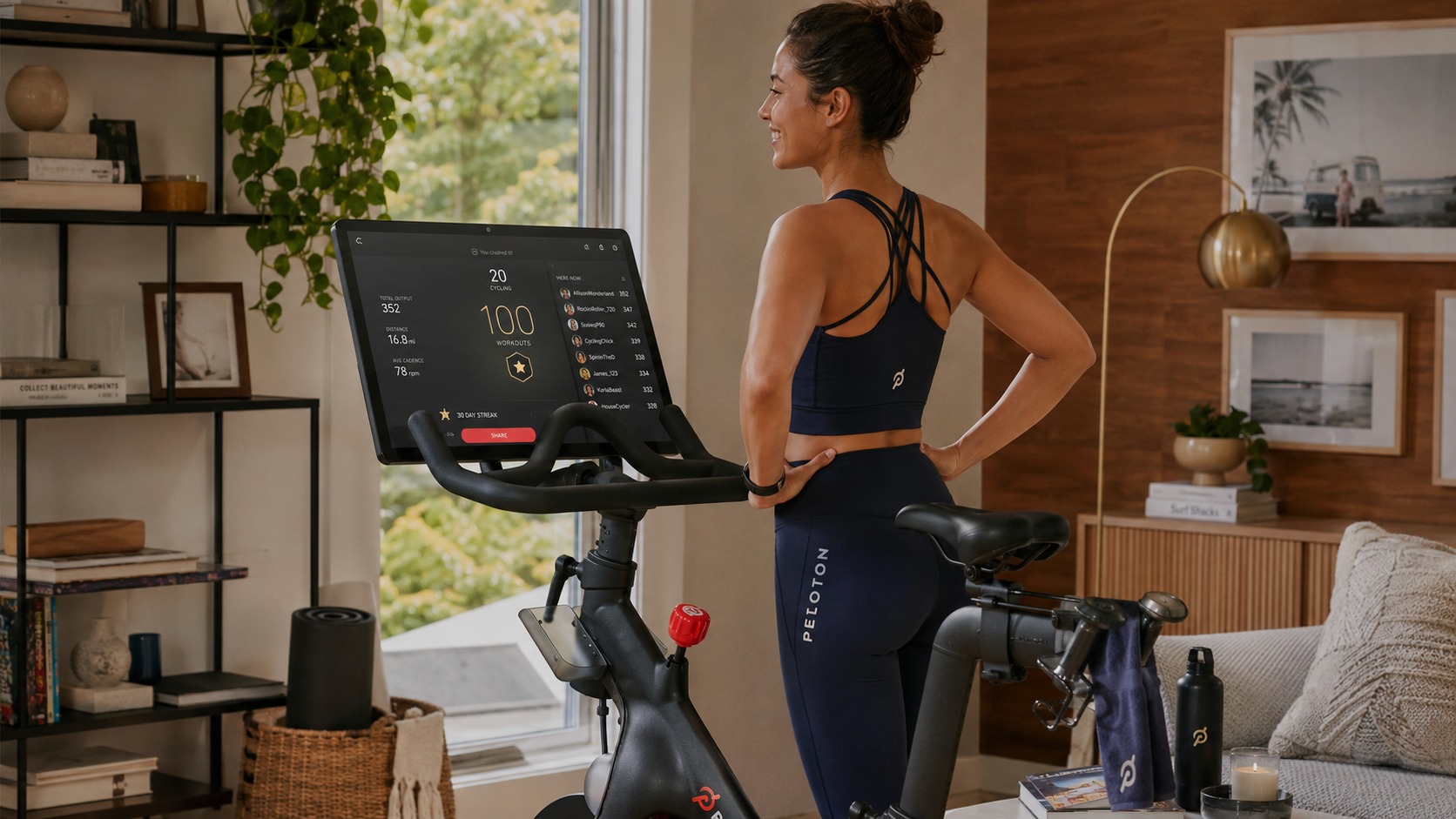
Riders talk about “their” instructors. They wear Peloton-branded clothing. They track streaks and milestones with genuine pride. Missing a session doesn’t just feel like skipping exercise, it feels like breaking a personal promise.
This is critical because identity-based habits are far more durable than motivation-based ones. When exercise becomes part of who you are, not just something you do, consistency stops being a struggle.
Peloton doesn’t push this identity aggressively. It lets it form organically through language, rituals, and recognition. But the result is powerful.
Ritual Turns Intention Into Habit
Peloton understands something many fitness providers overlook: habit is built on ritual, not willpower.
Every session follows a familiar rhythm. The same bike. The same interface. The same instructor voices. The same cues, countdowns, and musical build-ups.
That repetition isn’t boring, it’s comforting.
Ritual reduces cognitive load. Users don’t need to think about how to work out. They simply show up and follow a well-worn path. Over time, the ritual becomes the trigger. Seeing the bike, hearing the intro music, or recognising an instructor’s voice is enough to initiate action.
This is why Peloton sessions can feel strangely grounding. They create a sense of order in an otherwise chaotic day.
The Illusion of Togetherness Is More Powerful Than It Sounds
Peloton users are usually alone in their homes, yet they rarely feel isolated. Live classes play a huge role here. Thousands of people riding, running, or lifting at the same moment creates a shared psychological experience. Even if you never interact directly with another person, your brain registers that you are part of a collective effort.
The leaderboard reinforces this. You can see others moving alongside you, just ahead or just behind. You’re not competing aggressively, but you’re not alone either.
This kind of ambient accountability is incredibly effective. People are far less likely to stop or skip sessions when they feel part of a group, even a virtual one.
Instructors Feel Like Real Relationships
Peloton instructors are not just coaches. They are emotional anchors.
Users hear the same voices repeatedly. They recognise catchphrases, values, and personality traits. Over time, this creates a one-sided relationship that still feels meaningful.
When an instructor says, “I know this is hard, stay with me,” it lands differently than a generic motivational message. It feels personal, even though it isn’t.
This kind of connection is powerful because humans are wired for social bonding. Peloton leverages that wiring without requiring reciprocal interaction, which makes it scalable and surprisingly intimate at the same time.
People don’t skip workouts because they don’t want to let their instructor down even though the instructor will never know.
The Leaderboard Is Cleverer Than It Looks
At first glance, Peloton’s leaderboard looks like a simple ranking tool. In reality, it’s a finely balanced behavioural mechanism.
You can engage with it as much or as little as you like. You can chase others, ignore them, or focus purely on personal bests. This flexibility is key. Pure competition alienates many people. No competition at all can feel flat. Peloton sits in the middle, offering comparison without pressure. Most users aren’t trying to beat everyone else. They’re trying to beat themselves, with others acting as reference points rather than rivals.
That subtle design choice keeps engagement high without tipping into anxiety or avoidance.
Progress Is Always Visible (Even When Results Aren’t)
One of the most common reasons people quit exercise is that they can’t see progress quickly enough.
Peloton solves this by making progress unavoidable. Every session produces data. Output, cadence, heart rate, streaks, milestones, badges. Even if physical changes are slow, behavioural progress is constantly reinforced. This keeps the reward loop alive. Effort is immediately acknowledged, which makes repeating the behaviour far more likely.
Peloton understands that humans are more motivated by evidence of consistency than by distant outcome goals. Seeing “20 rides this month” is often more compelling than chasing an abstract fitness target.
Belonging Without Pressure
Peloton communities exist everywhere, hashtags, challenges, social groups, but participation is optional. This is an under-appreciated strength. Users can belong quietly. They can observe before engaging. They can feel part of something without having to post, comment, or perform socially.
For many people, especially those who feel intimidated by traditional gym environments, this low-pressure belonging is liberating. It removes social risk while still delivering social reward. That balance dramatically widens Peloton’s appeal.
Consistency Is Rewarded More Than Intensity
Peloton doesn’t glorify extremes. It celebrates showing up. Streaks, attendance milestones, and consistency badges all reinforce the behaviour that actually predicts long-term adherence: regular participation.
This matters because intensity is unreliable. Life gets busy. Energy fluctuates. Motivation dips. Consistency, however, can be designed for. By rewarding repetition rather than peak performance, Peloton aligns its system with how habits are actually formed. People don’t need to be perfect. They just need to return.
The Closed Ecosystem Keeps People In
Peloton controls the entire experience: hardware, software, content, instructors, language, metrics. This creates a closed loop where everything reinforces everything else. There’s no decision fatigue, no competing systems, no cognitive leakage.
Closed ecosystems are often more addictive because they reduce mental effort and increase immersion. Once users are inside, it’s easy to stay there. Leaving doesn’t just mean stopping exercise. It means leaving a familiar environment, identity, and routine.
So Why Is Peloton So Addictive?
Because it doesn’t rely on motivation.
- It builds habits through identity.
- It removes friction through ritual.
- It creates connection without pressure.
- It rewards consistency over perfection.
- It makes progress visible, always.
Peloton doesn’t ask people to work harder. It makes continuing easier.
The Bigger Lesson for the Fitness Industry
Peloton’s success isn’t about technology alone. It’s about behavioural design.
People stick with exercise when it feels:
- familiar
- meaningful
- socially safe
- and identity-reinforcing
That lesson applies just as much to health clubs, studios, and community-based fitness models as it does to digital platforms.
The real question isn’t, “How do we motivate people more?”
It’s, “How do we design experiences people don’t want to break away from?”
Peloton answers that question better than most and that’s why it’s so hard to quit.
If you would like to identify where your retention, attrition and member loyalty issues occur in your business then complete our 2 minute Retention Audit https://paul-zqwtxrtz.scoreapp.com
Join our Free Retention Guru Community
This group is for those who want to increase retention, reduce attrition and improve the customer experience in a health club environment. It's here for you to share your wins, your challenges and your experiences. It’s here so that you can find support and be supportive.

8 most common mistakes operators make.
Simply enter your name and email to download your free copy today!